
British Alpine Ski School Instructors Share Top Tips for Parallel Skiing, Ice and Carving

Good skiing advice often sounds different from one instructor to the next. One coach might talk about rolling the foot. Another might focus on rhythm, speed, balance, or where the skis point in the turn. At first, that can feel confusing. In practice, those different explanations are often aiming at the same outcome.
That is exactly what comes through when ski instructors from the British Alpine Ski School in Val d'Isere and Tignes answer three common questions:
What is your advice to transition from a wedge or stem to parallel?
What one thing do you consider most important when skiing an icy slope?
What do you prioritise when carving clean tracks?
The answers below draw on the detailed coaching points shared by Joe, Andrew and Dave, then pull out the common thread behind them.
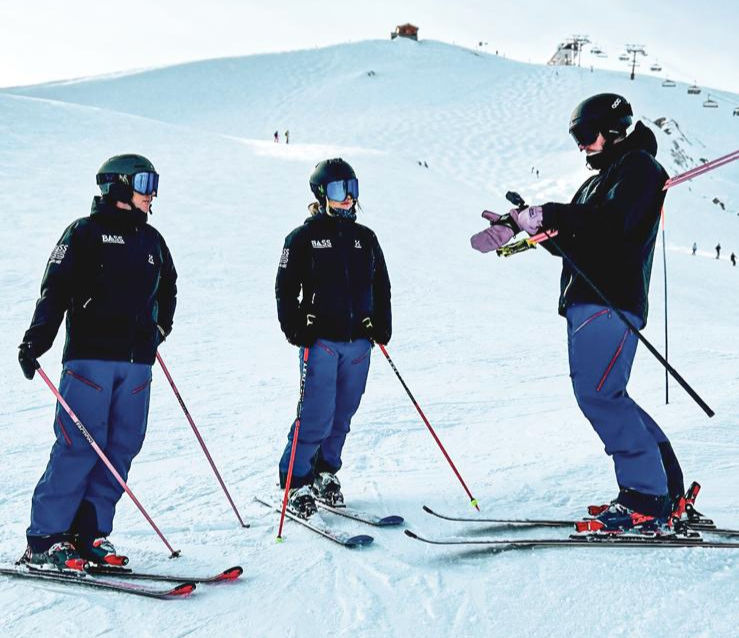
Different instructors may explain it differently, but the goal is the same
Skiing is full of different cues. Some make sense straight away. Others only click after a few runs, or after hearing the same idea in a new way.
That does not mean one instructor is right and another is wrong. A good coach chooses language that helps a skier feel the right movement. For some people, that means thinking about the feet. For others, it means thinking about rhythm, speed, balance, hands, or the shape of the turn.
Across these answers, the same themes keep coming back:
Stay balanced over the feet.
Let the skis work rather than forcing them.
Build movements progressively.
Focus on the outside ski without forgetting the inside ski.
Avoid sudden edge changes, especially on ice.
Be patient at the top of the turn.
Those ideas apply whether the goal is moving from wedge to parallel, staying composed on hard snow, or leaving two clean carved lines in the piste.
How to move from wedge or stem turns to parallel skiing
The move from a wedge or stem into parallel turns is one of the biggest milestones in skiing. It can also be one of the most frustrating, because many skiers try to make the skis parallel by pulling, twisting, or rushing.
The instructors take slightly different angles, but they all point towards the same thing: give the skis time, guide them smoothly, and stay balanced enough for the inside ski to match naturally.
Joe Cain focuses on the inside foot
Joe Cain’s advice is precise and easy to picture:
Gently slide the inside ski to match the outside ski by rolling the inside foot from big toe to little toe.
This is a useful cue because it gives the skier something small and specific to feel. Rather than thinking, “I must force my skis together,” the focus goes to the inside foot.
In a wedge turn, the outside ski usually does most of the work. The inside ski can get left behind, especially if the skier is tense or defensive. Joe’s cue helps the inside ski flatten, steer and then match the outside ski.
The important word is gently. If the skier yanks the inside ski across, they often lose balance or twist the upper body. A smooth roll from the big-toe side towards the little-toe side allows the ski to come in without drama.
Andrew Lockerbie uses rhythm and terrain
Andrew Lockerbie looks at the timing and setting of the task:
On an easy slope, make rhythmically linked turns, allowing the speed to increase.
This is a different explanation, but it leads to a similar result. On terrain that feels safe, rhythm helps the skier stop overthinking. Turn follows turn. The skis flow more easily. A little more speed can also help the skis track and respond, rather than stalling in a wedge.
The key is choosing an easy slope. If the piste is too steep, the skier will often brake hard, brace the legs, and return to the wedge. On a gentle blue or easy red, there is more space to let the skis run slightly and match earlier in the turn.
Andrew’s point also reminds us that parallel skiing is not only about leg position. It is also about confidence, flow and timing.
Dave Hudson asks for patience in the fall line
Dave Hudson gives a cue that many developing skiers need to hear:
Allow the skis to point into the fall line for a second longer.
The fall line is the direction a ball would roll down the slope. Many skiers who are moving from wedge to parallel turn away from it too quickly because they feel the speed build. That early panic often creates a stem, a push, or a rushed edge set.
Dave’s advice is about patience. Let the skis point downhill for a moment. Let the turn develop. When the skier accepts that short phase, the skis can come round more smoothly, with less need to force the turn.
This does not mean straight-lining or letting speed run away. It means allowing the skis to enter the turn properly, rather than shutting the movement down before it has started.
The shared outcome is smoother matching
Joe talks about rolling the inside foot. Andrew talks about rhythm and a suitable slope. Dave talks about patience in the fall line.
Different words, same direction.
All three answers reduce the need to stem. They encourage the skier to guide the skis, trust the turn, and let the inside ski match the outside ski. That is the heart of the transition to parallel.
A simple way to put the combined advice into practice is:
Choose an easy, quiet slope.
Link turns in a steady rhythm.
Let the skis point downhill briefly at the start of each turn.
Feel the outside ski support you.
Roll and slide the inside ski in to match.
The result should feel calmer than expected. Parallel skiing is rarely improved by rushing.
What matters most when skiing on ice
Icy slopes expose tension very quickly. Many skiers react by gripping harder, digging the edges in, leaning uphill, or trying to stop the skid immediately. The instructors all warn against that instinct.
Their shared message is clear: do not fight the ice. Stay balanced, manage the skid, and wait for grip you can use.

Joe Cain says to relax and stay balanced
Joe’s advice is direct:
Don’t fight too hard and stay balanced. Don’t try to dig those edges in. Let them skid and relax, making sure you are well balanced on the outside or downhill ski.
This is a strong point because ice punishes over-effort. If the skis are already skidding, suddenly trying to increase the edge angle can make them chatter, slip faster, or shoot away.
Joe’s focus on the outside or downhill ski is also important. On hard snow, balance over the outside ski gives the skier the best chance of controlling the turn. Leaning inside or uphill often takes pressure away from the useful edge.
Relaxing does not mean giving up control. It means staying mobile enough to respond.
Andrew Lockerbie warns against adding edge too quickly
Andrew makes a similar point:
Don’t try to fight the ice by increasing the edges too quickly once the skis are skidding. Allow the skis to skid until you reach some soft snow that you can turn on.
This is a very practical mountain skill. Conditions are rarely the same from top to bottom. A piste can have icy patches, scraped sections, grippy snow at the side, and softer areas where snow has gathered.
Andrew’s advice is to manage the situation you are in. If the skis are sliding on ice, forcing a sharp edge change may not help. It can be better to stay balanced, accept the skid, and look for the next usable patch of snow.
That takes discipline. The natural reaction is to panic and do more. The better reaction is to stay centred and do less until the snow gives you something to work with.
Dave Hudson compares it to walking on ice
Dave gives a simple analogy:
Ski down ice the same way you would walk on or down ice. Keep your weight over your feet and get your hands out wide to aid balance.
This is easy to understand because most people already know how they move on icy pavement. They do not take huge, dramatic steps. They keep the body over the feet, stay careful, and use the arms for balance.
The same applies on skis. If the body gets too far inside the turn, too far back, or too twisted, recovery becomes hard. Wide hands help quieten the upper body and improve balance.
This cue is especially useful for skiers who become narrow and tense when conditions get firm. A wider, calmer stance through the upper body can make the whole skier feel more stable.
The shared outcome is controlled skidding
Joe says let the skis skid. Andrew says allow the skid until softer snow appears. Dave says stay over the feet as if walking on ice.
Again, the explanations differ, but the outcome is the same. The skier keeps balance and avoids panic.
On ice, clean carved turns are not always realistic or useful. Sometimes the best skiing is a controlled skid with good posture, patient edges, and a clear line choice.
A useful checklist for icy sections is:
Keep the body over the feet.
Keep the hands visible and slightly wider.
Stay balanced on the outside ski.
Avoid sudden edge angles.
Let the skis skid if they need to.
Turn where the snow gives enough grip.
That approach may feel less aggressive, but it is usually more effective.
What instructors prioritise when carving clean tracks
Carving clean tracks means the skis travel along their edges with very little sideways skid. The tracks left in the snow look like two clean lines rather than brushed arcs.
It is tempting to think carving is about big angles. The instructors point towards something more useful: progressive edging, strong outside-ski support, and an active inside ski.

Joe Cain wants both skis involved
Joe highlights the outside ski first, then adds a vital detail:
Make sure you are strong on the outside ski, but don’t forget you have two edges carving in the snow. Keep your inside ski rolling onto the edge and achieving the same angle as the outside.
Many skiers think only about the outside ski when carving. That ski does take more pressure, especially through the middle and end of the turn. But the inside ski still matters.
If the inside ski stays flat, twists, or lags behind, the skier often loses symmetry. The skis can diverge, the inside knee can block the movement, and the turn becomes less clean.
Joe’s advice helps create two skis working together. The inside ski does not need the same pressure as the outside ski, but it should tip and travel in harmony.
Andrew Lockerbie prioritises early edging
Andrew’s carving advice focuses on when the skis move onto the new edges:
Allow the skis to get on to the new edges before the fall line, then gradually increase the edges throughout the rest of the arc by flexing the legs and moving them inwards.
This is a clear description of progressive carving. The ski should not be thrown onto a high edge angle all at once. It should engage early, then build through the arc.
Getting onto the new edges before the fall line gives the ski time to bend and shape the turn. If the skier waits until after the fall line, they often have to add pressure late, which can create a skid.
Andrew also mentions flexing the legs and moving them inwards. That movement allows the skis to tip while the upper body stays balanced. It is a key part of modern piste skiing.
Dave Hudson keeps the movement gradual
Dave’s advice is simple:
Roll your ankles and knees over slowly. Don’t try to get a big angle.
This is one of the best reminders for skiers learning to carve. A clean carved turn does not start with a dramatic lean. It starts with a smooth edge change.
Rolling the ankles and knees slowly helps the skis engage. It also gives the skier time to feel whether the edges are gripping. If they go straight for a big angle, they may overpower the ski, lose balance, or skid at the top of the turn.
Dave’s cue keeps the skier patient. The edge angle grows as the turn develops.
The shared outcome is progressive edge control
All three instructors are describing the same skill from different directions.
Joe focuses on both skis carving together. Andrew focuses on early edge engagement and building through the arc. Dave focuses on gradual ankle and knee movement.
Put together, the advice becomes a clean carving sequence:
Finish the old turn in balance.
Release and move smoothly to the new edges.
Tip the skis before the fall line.
Build edge angle gradually.
Stay strong on the outside ski.
Keep the inside ski active and matching.
Avoid chasing extreme angles too early.
The best carved tracks come from patience and precision, not from forcing the skis onto edge.
The common thread across all three skills
Parallel skiing, icy slopes and carving may sound like separate topics. They are linked by the same foundation.
Balance comes first.
Without balance, the skier has to brace, twist or fight. With balance, the skier can guide the skis, accept changes in snow, and build edge angles at the right time.
Patience comes next.
The skis need time to turn, skid, grip or carve. Rushing the fall line, forcing an edge on ice, or chasing a big carving angle too soon all create problems.
The feet do the fine work.
Joe’s inside-foot cue, Andrew’s early edging, and Dave’s ankle-and-knee rolling all point towards accurate movements from the lower body. The upper body supports the task, but the skis respond best when the feet and legs guide them with care.
That is why different instructors can use different language and still help skiers reach the same place. One skier may need to hear “roll the inside foot”. Another may need “keep your weight over your feet”. Another may need “let the skis point downhill for a second longer”.
The words change. The skiing improves for the same reasons.
The takeaway for your next run
On your next ski day, choose one idea rather than trying to remember everything.
If you are working towards parallel, focus on rhythm and gently matching the inside ski.
If the slope is icy, stay over your feet and allow a controlled skid rather than fighting for grip.
If you are carving, build the edge angle gradually and keep both skis involved.
Good skiing rarely comes from adding more effort. It comes from better timing, better balance and clearer movements. That is the shared message from the British Alpine Ski School instructors in Val d'Isere and Tignes: stay patient, stay centred, and let the skis do more of the work.


Comments